



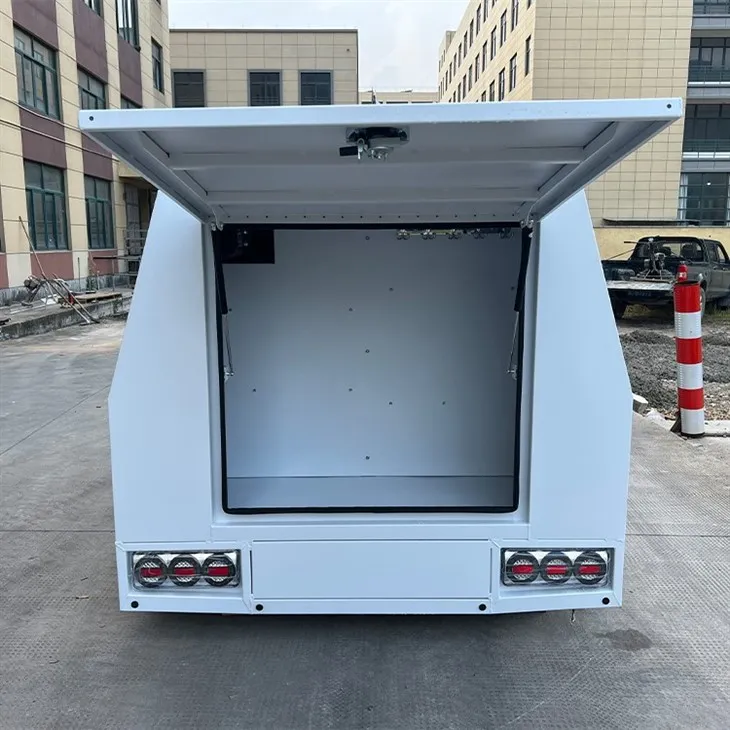
Aluminium Box 580x580x410
Founded in 2006, Alunov is China's leading supplier of aluminum products. We provide services that exceed customer expectations through core services and help customers unlock the potential of their products and brands to drive sales. CASE TOOLS was born with the simple objective of providing safe, reliable, and secure storage solutions to traders.

Our Advantages
Strictly Controlled Manufacturing Process
We have obtained ISO9001:2015 and BSCI certificates, and our strict quality control system guarantees the quality of our products. The one-year warranty for non-man-made damage solves users' worries.
Reliable Product Quality
Our company has introduced a series of advanced equipment, including laser cutting machines, CNC plasma cutting machines, CNC bending machines, and other professional machines to accurately control product quality.
OEM/ODM Solution Available
We keep conducting market research, expanding our team, and improving our supply chain and services. Whether it is standard products or special product solutions: we will work with you to meet your diverse needs.
Strong Manufacturing Capabilities
Our company has its own factory of 140,000 square meters and about 150 skilled workers, which can achieve fast delivery. Strong production capabilities allow orders to be completed within 35 days.
Aluminium Boxes for Sale Display


An aluminum box, also known as an aluminum storage box or aluminum toolbox, is a container made primarily from aluminum. It is designed to provide secure storage and protection for various items, tools, equipment, or valuables.
Advantages of Aluminium Box
High Strength, Low Weight
There's a reason why aluminum has been the material of choice for aircraft construction during most of the modern era. It's strong, and it's light. That same strength-to-weight ratio, which supports high-performance aircraft as they hurtle through the sky, does a great job of creating highly durable, protective custom cases with a minimum weight.
Hygienic & Easy to Decontaminate
Aluminum is a very smooth, non-porous and durable surface. This makes it easy to keep it clean and hygienic. It's one reason why aluminum cases can be a great option for medical devices and applications, where sterilization and hygiene are critical considerations.
Getting Banged Around Isn't an Issue
Aluminum is a strong material that resists impacts, and can do a great job of protecting its contents. Under very high pressure, it's possible for aluminum to be dented or deformed. But even the very act of that deformation absorbs energy to protect the case's contents.
Naturally Protects Electronics
Aluminum has the highest electrical conductivity-to-weight ratio of any metal. An aluminum case is excellent for RFI / EMI shielding and controlling ESD (electrostatic discharge). Aluminum is also an efficient reflector for externally generated interference, namely, electromagnetic wavelengths of radio and radar.
UV Rays? Not a Problem
Lots of materials degrade over time when exposed to UV rays from direct sunlight. Leave many cases out in the sun for a long period of time, and you can expect them to fade and lose strength. Leave an aluminum case out in the sun, and it'll warm up. That's about it.
Insensitive to Temperature Extremes
Aluminum is stable from -238°F all the way up to 302°F. The former's about 100° lower than the lowest temperature ever recorded, while the latter's close to 100° higher than the temperature that water boils at. In cold weather, aluminum cases do not become more fragile and brittle; instead, the tensile strength increases without lose of ductility. The low coefficient of thermal expansion of aluminum allows it to sustain higher temperatures without distortion.
Application of Aluminium Box

Industrial Maintenance and Repair
Aluminium cases are widely used in industrial settings to store and transport tools and equipment required for maintenance and repair work. These cases help technicians and maintenance personnel organize and carry their tools to various work sites efficiently.

Construction and Carpentry
Construction workers, carpenters, and contractors often use aluminium cases to store and transport their hand tools, power tools, and other essential equipment to construction sites. The rugged nature of these cases ensures that tools remain protected from damage during transportation.

Electrical and Electronics Work
Electricians and electronics technicians use aluminium cases to carry sensitive instruments, meters, and other tools to troubleshoot, repair, and install electrical and electronic systems. The cases provide protection against electrical interference and physical damage.
Medical Equipment
In the medical field, aluminium cases are used to store and transport specialized medical tools and equipment. This ensures that delicate and expensive medical instruments remain safe and sterile during transit.

Instrumentation and Measurement
Engineers and technicians in fields like metrology, quality control, and scientific research use aluminium cases to store precision instruments and measurement tools. The cases help protect delicate instruments from damage and maintain their accuracy.

Aerospace and Aviation
Aerospace and aviation professionals use aluminium cases to store and transport critical tools, equipment, and components for aircraft maintenance, repair, and assembly. The cases are designed to withstand the rigorous demands of these industries.
Surface Treatments for Aluminium Box
The sublimation process of aluminum begins with the pre-treatment of the profile. The profile is then pre-painted with a powder coating, giving it a protective and decorative layer. In the second phase, the profile is covered with a sublimation transfer, previously printed with the decorative effect chosen by the customer. To allow the decoration to be transferred to the profile itself, the latter is placed in an oven at a high temperature: thanks to a combination of heat and pressure, the pigment molecules are dispersed in the form of gas, passing through the pre-printed film support to the paint layer of the profile, definitively transferring to the aluminum. The last phase is dedicated to the removal of the film and to all the necessary checks to ensure that the decoration has penetrated into the paint on the profile, always guaranteeing high quality.
When anodising aluminium, an electrochemical process is used to form an oxide layer in/on the material. As such, this oxide film forms a protective layer in/on the aluminium. What's interesting about this, is that no additional layer is applied to the aluminium when anodising. This is because anodising provides a protective layer that is built up from the already existing aluminium. The oxide film is fully integrated into the aluminium, thanks to a strong molecular connection. The main reason for anodising is to protect the aluminium. Thanks to the anodising process, corrosion resistance increases and the material retains its appearance for longer. The hard, wear-resistant anodising layer that is created protects the underlying aluminium, making it a more durable end product. The oxide layer can also have great decorative value. Anodisation also makes it possible for aluminium to take on various attractive colours. While the unique metal character of the appearance is retained, it also acquires a nice look. The aluminium is therefore not only better protected, but also embellished.
To provide the aluminium with a decorative and protective layer, a powder coating can be opted for. After a number of pre-treatments, which include degreasing and rinsing, the powder coating is applied by means of an electrostatic process. The negatively charged powder is hereby applied to the aluminium object, which is positively charged. The subsequent electrostatic effect creates a temporary adhesion of the coating. The object is then heated in a cure oven so that the coating melts and flows, forming a continuous liquid film. Once it is cured, a solid connection is formed between the coating and the aluminium. Because, unlike with wet paint, no solvents are used when applying the powder coating, it is also a more environmentally friendly alternative. On the other hand, the end result following powder coating is slightly rougher, as the texture of the granules used remains somewhat visible.
Wet paint is an interesting alternative where aesthetics takes precedence. It produces the best end product, as a much smoother result is achieved. Also, certain decorative effects that are not feasible with powder coating, can be applied to wet paint. What's also convenient, is that with this surface treatment there are no maximum dimensions to take into account. This is the case with powder coating, as a spray booth is used. As this is not needed for wet paint, maximum dimensions of the aluminium to be coated don't require consideration. That is why wet paint is a practical solution for colouring large aluminium parts.
Maintenance Tips for Aluminium Box
The first step in cleaning your aluminum toolbox is to deoxidize. There are numerous products sold in liquid form for this purpose. You simply apply a small amount to the surface of the aluminum and then work it in. Many experienced truckers use a scrap of old carpet so as to avoid scratching the metal during the process. Work in the deoxidizer or until the surface of the metal shows a uniform, whitish color across the surface. If you are working with diamond-plated aluminum, you will need to apply the deoxidizer in four different directions: clockwise, counterclockwise, and then in each direction of the diamonds. This removes the oxidation build-up on the diamond edges.
Once you've achieved that uniform whitish color, you know the deoxidation part is done. The second step is to take some liquid polish to the metal. Apply a small amount and then work it in with a piece of carpet (or whatever else you used) in the same four directions. Working the polish in will create a dark, almost black film. When you start seeing bright aluminum shining through that film you will know that the polishing process is complete. Finally, take a rag or towel to the metal to remove the polish. Work in the same four directions until all the polish is removed. You will be left with bright, beautiful, and protected aluminum.
Do not try to do the entire surface of the aluminum toolbox all at once. Work in small sections so that you don't give either the deoxidizer or polish any chance to begin solidifying. This will create a uniform finish when you're all done. Between cleanings, a little cooking spray can help remove dirt and bugs without harming the protective layer of polish.
Our Certificate
Multiple quality certifications, test reports and patent certificates reflect our strength and product reliability.


Our Factory
Professional modern factories can complete various specialized processing such as laser cutting, CNC bending, welding, assembling, powder coating, polish, etc.


Ultimate FAQ Guide to Aluminium Box
Q: How is the heat dissipation of the Aluminum Box?
Q: Is the Aluminum Box magnetic?
Q: Is the Aluminum Box anti-static?
Q: Can Aluminum Box be customized?
Q: Can aluminum boxes be customized?
Q: What are the features of Aluminum Enclosures?
When choosing an aluminum enclosure for your electronic device, check the thermal conductivity rating. The thermal conductivity of aluminum is 237 W/(m·K). It means that it conducts heat well and can help dissipate heat from your electronic devices. However, keep in mind that the thermal conductivity of aluminum can vary depending on the alloy.
Electrical Conductivity
aluminum is an excellent conductor of electricity. It means that it can be used in electrical applications where other materials, such as copper, would be too expensive or impractical.
Magnetic Permeability
Aluminum does not allow magnetic lines of force to pass through it, making it the perfect material for electrical applications where shielding is necessary.
Environmental Friendliness
It is vital to consider how your packaging will impact the environment. Aluminum is one of the recycled materials on the planet and can be reused infinite times without losing quality.
Q: Why keeping aluminium box clean and polished is important?
Q: How to clean aluminum box?
After dampening a microfiber cloth in warm, soapy water you'll want to use circular motions to lightly cleanse your case. Move slowly while you work. This will ensure that you do not scratch the surface. Be sure to focus on the entire surface of the case rather than simply where you see any dirt or dried on substances. This will give your aluminum case a streamlined, evenly cleansed appearance.
Dry with a Clean Microfiber Cloth
After you've finished cleansing your aluminum case with a damp, soapy microfiber cloth you'll want to swiftly move over the surface shell of your case with a dry microfiber cloth. Make sure that your dry microfiber cloth is clean before you start. Rub the dry cloth in swift, circular motions until any wet surface patches disappear. It's important to wipe off any wet surfaces. You won't want your aluminum case to dry with wet spots, because this can cause an uneven finish. After you've fully dried your custom aluminum case, you're ready to pack it with your equipment and head out the door.
Q: Can aluminum boxes be used for outdoor activities?
Q: What are pickup truck tool boxes made of?
Q: Which aluminum enclosure type is right for you?
Die-cast aluminum enclosures are made by injecting molten aluminum into a die, which is a mold that gives the enclosure its shape. This process allows for complex shapes and details to be added to the enclosure. Die-cast enclosures are known for their durability, strength, and ability to provide electromagnetic shielding.
Extruded Aluminum Enclosures
Extruded aluminum enclosures are made by forcing heated aluminum through a die to create a continuous profile. This profile can then be cut to the desired length and machined to create the necessary openings and features. Extruded enclosures are known for their cost-effectiveness, versatility, and ability to be customized.
Key Differences Between Die-Cast and Extruded Aluminum Enclosures
One key difference between die-cast and extruded aluminum enclosures is the level of detail and complexity that can be achieved. Die-cast enclosures can have intricate shapes and features, while extruded enclosures tend to have simpler shapes. Another difference is the cost - die-cast enclosures tend to be more expensive due to the tooling required for the manufacturing process.
Choosing the Right Enclosure for Your Project
When choosing between die-cast and extruded aluminum enclosures, there are several factors to consider. These include the level of detail required for your design, the strength and durability needed for your application, and the cost-effectiveness of each option. It is also important to consider any specific requirements for your project, such as electromagnetic shielding or customization options.
Q: What is the production process of Aluminum Box?
Q: How to design custom aluminium box?
Make sure the mode of your box design has the following specifications for purposes of accuracy:
● Hole size, location, and depth if any.
● The thickness of the material to be used
● The flatness of the surface
● Overall length, height, and width of the custom aluminum box.
● The radius of all the corners.
● Countercheck the measurements and dimensions before moving to fabrication.
Q: Can aluminum boxes be used for shipping fragile items?
Q: What materials are Aluminum Box made of?
Grade 6061 is also known as workhorse aluminum. The main alloying ingredients are manganese and silicon. It has more resistance than the 3000 series. Besides, it has high heat welding properties. It is the best option in environments where the environment is humid. More corrosive resistant than another grade, good for making box sections.
Grade 3000 Series
It's an alloy of aluminum and manganese. It is most commonly used in most applications. Additionally, it cannot handle high temperatures and readily wieldable.
Grade 1000 Series
It's the purest form of Aluminium. Mostly, you can use it for high temperatures applications. This is because it has good workability and is malleable, besides better corrosion-resistant. Additionally, it is excellent for challenging forming operations. It is commonly used by fabricators who will bend and form the aluminum sheet into desired shapes. chemical storage.
Q: Why is it good to use aluminum to make a box?
Q: Are Aluminium Boxes recyclable?
Q: What is the strength of Aluminium Boxes?
Q: Can aluminum boxes be used for tool storage?
Q: Are Aluminium Boxes resistant to corrosion?
Hot Tags: aluminium box 580x580x410, China aluminium box 580x580x410 manufacturers, suppliers, factory
Previous
Aluminium Box 670x270x320Next
No InformationYou Might Also Like




Send Inquiry