

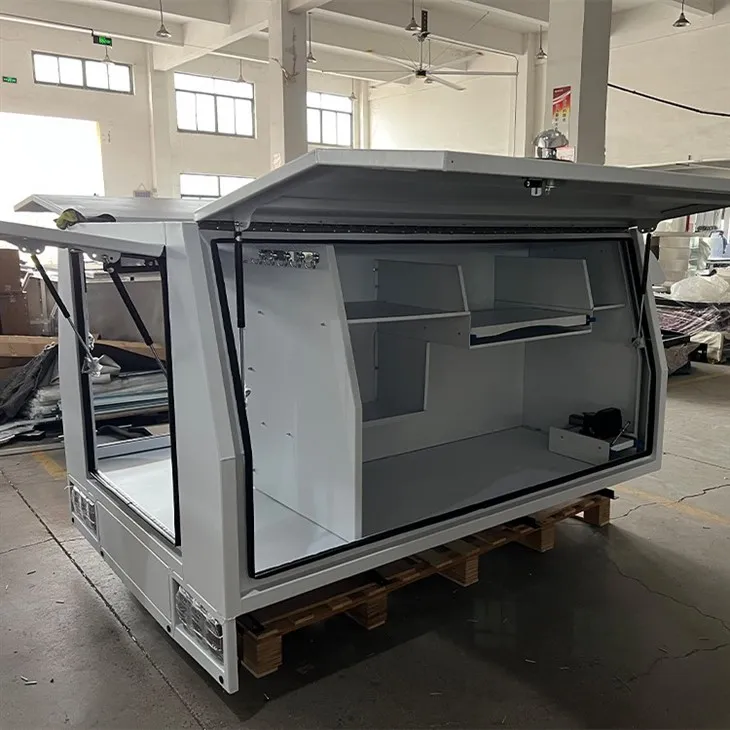
Introduction: The Synergy Equation – When 1 + 1 > 2
In the competitive landscape of trade, service, and exploration, operational efficiency is the cornerstone of profitability and success. For businesses relying on utility vehicles (UTEs), this efficiency is often won or lost in the details of their mobile setup. While selecting a high-quality UTE tray or a robust UTE canopy individually is a step forward, the true frontier of performance lies in their strategic integration.
A thoughtfully integrated tray and canopy system transforms a pickup truck from a simple transport vehicle into a seamless, secure, and highly organized mobile workspace. This integration is not merely about bolting two components together; it is a holistic design philosophy that considers workflow, asset security, accessibility, and professional branding as a single, cohesive unit.
For fleet managers, equipment distributors, and business owners, the cost of non-integration is tangible: wasted time searching for tools, cross-contamination of materials, compromised security between compartments, and a disjointed professional image. This guide, presented by G-forms, China's premier aluminium products manufacturer, provides a comprehensive framework for designing, specifying, and implementing the ultimate integrated UTE solution. We will move beyond products to examine systems, empowering you to build a mobile asset that drives productivity from the ground up.
Chapter 1: Blueprinting Your Mobile Workspace – A Workflow-Centric Design Methodology
Before specifying a single component, successful integration begins with a deep analysis of the end-user's operational workflow. This human-centered design phase is what separates a custom solution from an off-the-shelf compromise.
1.1 Conducting a Workflow Audit: The Critical Questions
Engage with the end-client or analyze your own operations to answer these foundational questions:
The Tools & Inventory Audit:
What tools, parts, and materials are carried every day vs. occasionally?
What are the dimensions, weights, and values of these items?
Which items are sensitive to weather, dust, or theft?
How are consumables (fasteners, cables, fluids) stored and accessed?
The Process & Personnel Analysis:
What is the typical sequence of tasks on a job site? Which tools are needed first?
How many personnel access the vehicle simultaneously?
Is there a need for a clean workspace (e.g., for calibrating instruments) versus a dirty area (for greasy tools or soil samples)?
The Environmental & Access Factors:
What percentage of work is in urban, rural, or severe off-road environments?
How is loading/unloading performed (manual, forklift, crane)?
Is there a need for power (110V/240V, 12V, USB) at the point of use?
1.2 The Zoning Principle: Designing for Logical Flow
Based on the audit, divide the integrated space into functional zones. This conceptual model maximizes efficiency and minimizes motion waste.
Zone 1: The Primary Workbench (Tray Focus).
Location: Central, forward section of the tray, often near the headboard.
Function: Houses the most frequently used, bulky, or heavy equipment. Designed for rapid, standing access.
Integration Example: A Premium Tray with a drop-down side gate becomes an instant workbench. Above it, the lower section of the Aluminium Canopy might have a slide-out shelf for meters or laptops.
Zone 2: Secure & Organized Storage (Canopy Focus).
Location: Within the main body of the UTE canopy.
Function: Secure, weatherproof storage for high-value tools, sensitive electronics, and personal gear. Organized via shelving, drawer systems, and modular bins.
Integration Example: Custom-fitted alloy drawers inside the canopy, accessible via wide-opening doors. The drawer system can be bolted directly to reinforced mounting points pre-installed on the tray floor.
Zone 3: Bulk & Raw Materials (Tray Rear).
Location: Rear section of the tray.
Function: For long, dirty, or bulky items: conduit, lumber, generators, recovery gear.
Integration Example: Heavy-duty tie-down rails in the tray, combined with canopy-mounted internal straps or nets to prevent forward shift during braking.
Zone 4: Integrated Utilities (Whole System).
Location: Distributed throughout.
Function: Power distribution, lighting, communications, and climate control (for Camper Canopy integrations).
Integration Example: A central battery system housed in a lockable under-tray toolbox on the Premium tray, wiring running through internal conduits to outlets and LED lighting inside the canopy and under tray edges.
Chapter 2: The Mechanics of Integration – Technical Protocols for a Seamless System
Achieving a factory-finished, reliable integration requires meticulous attention to mechanical, electrical, and sealing details. This is where partnering with a single-source manufacturer delivers unparalleled advantages.
2.1 Mechanical & Structural Integration
The goal is a rigid, rattle-free, and safe connection that behaves as a single unit under load and stress.
Unified Mounting Architecture:
Problem: A canopy mounted to a generic tray may align poorly, stressing points and causing leaks.
G-forms Solution: As an integrated factory, we design the Premium or Heavy Duty tray and the Aluminium Canopy as a matched set. The tray features precisely positioned, reinforced mounting pads that correspond exactly with the canopy's leg brackets. This ensures perfect alignment, even weight distribution, and the use of grade-rated bolts for a secure, permanent fit.
Load Path Management:
In a Heavy Duty application, the integrated system's load must be properly transferred to the vehicle's chassis. Our engineers calculate load paths, ensuring that the tray's main rails and the canopy's structure work in concert, preventing point loads that could damage the vehicle or the components.
2.2 Environmental Sealing & Protection
A critical yet often overlooked aspect. The seam between the tray and the canopy is a potential entry point for dust and water.
Perimeter Sealing Systems:
We employ a multi-stage sealing approach. A high-density, closed-cell foam tape is first applied to the entire top flange of the tray. The canopy is then lowered onto it, compressing the tape to form a primary seal.
For extreme environments, a secondary, externally applied silicone or polymer sealant can be added, creating a completely waterproof and dustproof barrier. This is standard in our systems designed for mining or desert exploration.
Internal Drip Management:
Even with a perfect seal, condensation can occur. Integrated systems can be designed with subtle internal gutters or channels to direct any moisture to drainage points, keeping stored contents dry.
2.3 Electrical Systems Integration
A professional mobile workspace requires reliable, safe, and tidy power.
Centralized Power Hub:
The ideal setup involves a dual-battery system with an isolator. The auxiliary battery-often a deep-cycle AGM or Lithium unit-is housed in a secured, ventilated locker within the Premium tray's under-body storage or in a dedicated canopy compartment.
Pre-Wired Harness Looms:
G-forms' advantage as a supplier and manufacturer is the ability to install pre-fabricated, loomed wiring harnesses during production. Conduits are built into the tray's rails and the canopy's structure. This allows for clean, plug-and-play installation of:
Interior Canopy Lighting: Motion-sensor or door-switch activated LED strips.
Exterior Work Lights: Floodlights mounted on the canopy or tray headboard.
12V/USB Outlets: Positioned inside the canopy and on the tray's headboard for battery tool charging.
Reverse Camera & Telemetry: Wiring for operational and safety systems.
Chapter 3: Industry-Specific Integrated Solutions – From Concept to Reality
Here we translate the principles into tangible solutions for key industries, showcasing the power of a purpose-built, integrated system.
3.1 Solution Profile: The Integrated Electrical Service Vehicle
Client Need: A national electrical contractor requires vans-level organization and security in a more agile and off-road-capable UTE platform for service teams.
G-forms Integrated System:
Tray: A Premium UTE Tray with a drop-down side gate (instant workbench), under-tray lockers for heavy reels and PPE, and integrated ladder racks.
Canopy: A fully shelved Aluminium UTE Canopy with a partitioned interior. One side has shallow shelves for small parts bins (connectors, breakers); the other has deep shelves for drills, benders, and larger tools.
Integration Highlights:
The canopy's internal shelving aligns with the tray's drop-down gate, creating a continuous workspace.
A slide-out tray from under the canopy floor holds a cable crimping station.
The entire system is pre-wired with 12V/USB outlets at the workbench and inside the canopy.
Business Outcome: Reduced time on site locating tools and parts, improved security for expensive instruments, and a highly professional image that instills client confidence.
3.2 Solution Profile: The Geological Exploration Support Vehicle
Client Need: A mining exploration company needs to transport sensitive core samples and drilling equipment across remote, rugged terrain with protection from dust and moisture.
G-forms Integrated System:
Tray: A Heavy Duty UTE Tray with a steel sub-frame for extreme torsional rigidity, a 5mm checker-plate floor, and heavy-duty pivot points for a removable jib crane.
Canopy: A Heavy-Duty Alloy UTE Canopy with enhanced sealing, external reinforcement, and a custom, vibration-dampened internal racking system for core sample trays.
Integration Highlights:
The canopy is permanently and hermetically sealed to the tray using a dual-gasket system.
Internal racking is bolted directly to the tray's main rails through the canopy floor, creating an ultra-secure, unitized structure.
Internal LED lighting and a 12V air vent/fan system to reduce condensation.
Business Outcome: Zero sample contamination, protection of capital equipment from dust and impact, and reliable operation in environments where failure means stranded crews and lost data.
3.3 Solution Profile: The Premium Landscape & Arborist Rig
Client Need: A high-end landscaping firm wants a sleek, efficient setup for transporting noisy, dirty power tools alongside delicate plants and materials, without cross-contamination.
G-forms Integrated System:
Tray: A sleek Premium Tray with smooth lines, a lockable under-toolbox for chainsaws and fuel, and a hidden, tip-out bin for mulch and soil.
Canopy: A streamlined Alloy UTE Canopy with a bright white interior, a roof-mounted ventilation fan, and a segregated compartment at the rear for potted plants and bags of fertilizer.
Integration Highlights:
The under-tray toolbox is accessed from the side, keeping dirty equipment away from the clean canopy space.
The canopy' plant compartment has a waterproof, easily washable liner.
The system's clean, color-matched design presents a premium brand image.
Business Outcome: Efficient separation of tools and materials, a professional appearance that commands higher-value contracts, and easy clean-down at the end of the day.
Chapter 4: The Compelling Business Case for Single-Source Integration
Sourcing a tray from one supplier and a canopy from another introduces significant risk and hidden cost. Partnering with a top manufacturer like G-forms for an integrated system delivers definitive strategic advantages.
4.1 Unmatched Co-Engineering & Design Integrity
Holistic Design Responsibility: Our engineers model the complete system, ensuring structural harmony, optimal weight distribution, and perfect fitment. There is no blame-shifting between tray and canopy suppliers if an issue arises.
Streamlined Communication: You have a single point of contact for the entire project, from initial concept through to final delivery and warranty support.
4.2 Guaranteed Compatibility & Warranty Assurance
Plug-and-Play Certainty: Every bolt will fit, every seal will match, and every wire will reach its terminal. This eliminates costly on-site modifications and delays during installation.
Unified Warranty Coverage: A single warranty covers the entire integrated system. This simplifies support and ensures any systemic issue is resolved comprehensively, not piecemeal.
4.3 Total Cost and Time Efficiency
Reduced Procurement Overhead: One RFQ, one order, one shipment, one point of invoicing.
Elimination of Integration R&D: The time and cost you would spend designing brackets, seals, and wiring harnesses are absorbed by our proven, integrated design process.
Optimized Production Lead Time: As a vertically integrated factory, we can sequence the build of the tray and canopy in parallel, reducing overall lead time compared to coordinating two separate suppliers.
4.4 Enhanced Resale Value & Brand Equity
Cohesive Asset: A professionally integrated UTE is perceived as a custom, high-value tool, not a collection of parts. This translates to a higher residual value.
Brand Amplification: A sleek, purpose-built vehicle serves as a powerful mobile advertisement, reflecting a company's commitment to professionalism, organization, and quality
Conclusion: Building Your Competitive Advantage on a Single Foundation
In the pursuit of operational excellence, the integration of your UTE tray and canopy is not a mere technical exercise-it is a strategic investment in workflow, security, and brand identity. The mobile workspace you create today directly impacts the productivity and profitability of your teams tomorrow.
The most reliable, efficient, and cost-effective path to this optimal setup is through partnership with a single-source provider capable of both world-class manufacturing and holistic systems engineering.
G-forms stands as that partner. From the raw aluminum extrusion to the final integrated system rolling off our line, we control every variable. We are not just a canopy manufacturer or a tray factory; we are engineers of mobile workspace solutions.
Ready to Engineer Your Ultimate Mobile Workspace?
The journey begins with a conversation about your specific operational challenges and aspirations.
Initiate a Consultation: Contact the G-forms engineering team. Share your workflow audit, vehicle specs, and performance goals.
Collaborative Design Phase: We will work with you to develop a 2D/3D integrated system design, complete with specifications and ROI projections.
Prototype & Production: For large fleet orders, we can build a prototype for evaluation. Upon approval, we move into efficient, quality-controlled production.
Global Delivery & Support: Your integrated systems are shipped directly from our factory, supported by comprehensive documentation and our global technical support network.
Visit g-forms.com to start this process. Explore our integration portfolio, download technical resources, and use our professional contact form to begin designing the mobile workspace that will define your competitive edge for years to come. Let's build the future of your field operations, together.


