

Executive Summary: The Tray as a Strategic Asset
In the world of commercial and industrial utility, the UTE (pickup truck) is not merely a vehicle; it is a mobile platform for productivity, a rolling billboard for your brand, and a significant line item on the balance sheet. While much attention is paid to the vehicle's engine or cab, the most critical interface between your investment and your revenue-generating activity is often the UTE tray.
A well-chosen tray amplifies efficiency, organization, and safety. A poorly specified one becomes a persistent source of operational drag: inefficient loading, premature wear and tear, unscheduled downtime, and ultimately, increased total cost of ownership. For procurement officers, fleet managers, and equipment distributors, selecting the right tray is a technical and financial decision with direct consequences for the bottom line.
This guide provides a comprehensive, commercially focused analysis of the three primary tiers of UTE trays: Standard, Premium, and Heavy Duty. We will dissect their engineering, appropriate applications, and total cost of ownership to empower you, the B2B decision-maker, with the data needed to make an optimal investment. At G-forms, we understand that for industries ranging from construction and mining to agriculture and municipal services, a tray is not an accessory-it is a fundamental piece of capital equipment. As a leading factory and supplier since 2006, we engineer solutions that meet the uncompromising demands of the global market.
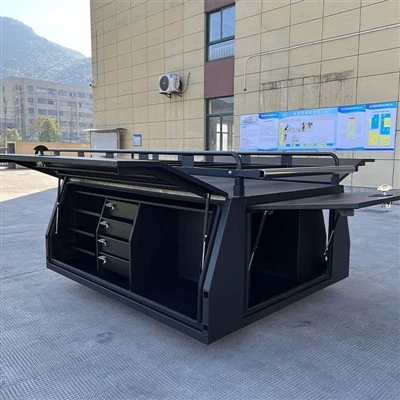
Chapter 1: Foundational Reliability – The Standard UTE Tray
The Standard UTE Tray represents the entry point into purpose-built utility. It is designed to replace the factory-fitted tub with a more functional, durable, and cost-effective platform for general trade and light commercial use.
1.1 Technical Specifications & Design Philosophy
A quality Standard Tray is defined by robust simplicity and value-oriented engineering. Key specifications typically include:
Material & Construction: Fabricated from 3mm-4mm marine-grade aluminum sheet for the floor and sides, supported by a perimeter frame of rectangular or C-channel aluminum extrusions. Welding is consistent and clean, focusing on reliability over aesthetic flourishes.
Load Capacity: Static load ratings generally range from 1,000 kg to 1,500 kg (2,200 lbs to 3,300 lbs), suitable for the majority of tools, materials, and equipment carried by tradespeople.
Standard Features:
Headboard: Integrated or bolt-on, often with a recessed panel for vehicle branding.
Side Heights: Typically 400mm to 500mm, offering a balance between load containment and easy access.
Tie-Down Points: Robust, reinforced D-shackles or rail systems along the tops of the sides.
Finish: A durable, single-color powder coat for corrosion protection.
Compatibility: Designed to mount directly to the vehicle's original chassis points.
1.2 The Manufacturing Perspective: Consistency at Scale
For a top manufacturer like G-forms, the Standard Tray is a testament to efficient, high-quality production. Our approach ensures that even at this entry tier, quality is never compromised:
Digital Fabrication: CNC laser cutting and press braking ensure every panel and bracket is identical, guaranteeing perfect fitment across an entire fleet order.
Jig-Based Assembly: Trays are assembled on precise welding jigs. This eliminates variance, meaning the 50th tray in an order will fit a vehicle identically to the 1st.
Value Through Process: Our vertical integration as a factory allows us to control costs without sacrificing core material integrity or weld quality, delivering exceptional value to our B2B partners.
1.3 Ideal B2B Applications & Client Profile
The Standard Tray is the rational choice for businesses where the tray is a functional necessity but not subjected to extreme daily abuse. Its value proposition is reliable functionality at an optimal price point.
Primary Users:
Urban Trade Fleets: Electricians, plumbers, landscapers, and HVAC technicians.
Light Delivery & Courier Services: Requiring a flat, accessible load space.
Utility Maintenance Crews: For carrying a standardized set of tools and parts.
Distributors & Rental Yards: Catering to the broad mid-market demand.
Business Case: It minimizes upfront capital outlay while providing a significant upgrade over OEM tubs in terms of durability, space, and professional appearance. It is the workhorse for predictable, on-road environments.
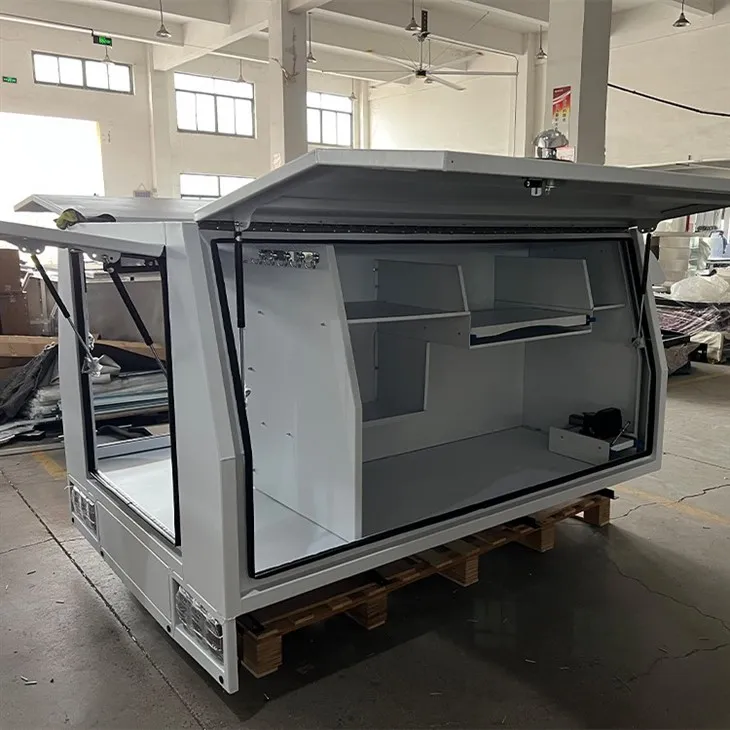
Chapter 2: The Integrated Workspace – The Premium UTE Tray
The Premium UTE Tray is engineered for the professional who views their vehicle as a mobile workshop. It transcends basic functionality to become a productivity-enhancing system, integrating storage, organization, and access solutions directly into its design.
2.1 Beyond the Base: Defining Features of a Premium Tray
A Premium Tray is characterized by enhanced materials, intelligent design, and integrated features that save time and reduce on-site clutter.
Enhanced Material Specifications:
Thicker Flooring: Often 4mm-5mm aluminum plate, sometimes with an anti-slip surface pattern (diamond plate or grit-coated) for superior durability and safety.
Heavier-Duty Extrusions: Larger or thicker-walled perimeter rails and cross-members to handle dynamic loads and frequent accessory use.
Integrated Storage & Organizational Systems (The "Toolbox Built-In"):
Under-Tray Toolboxes: Sealed, lockable compartments that utilize space between the tray floor and chassis rails, accessible from the sides.
Bulkhead Cabinets: Lockable storage integrated into the headboard.
Liquid Storage: Secured holders for fuel or water jerry cans.
Ladder/Boom/Conduit Racks: Bespoke mounting points for long or awkward items.
Advanced Functional Design:
Drop-Down or Removable Sides: For forklift or wide-load access.
Pre-Drilled Rails: For aftermarket accessories like canopy mounts, hoists, or custom racking.
Internal Wiring Conduits: For clean installation of work lights, beacon cabling, or reverse cameras.
Upgraded Finish: Often a multi-stage, thicker powder coat with a wider color selection for corporate branding.
2.2 The Manufacturer as a Solutions Partner
Producing a Premium Tray requires a different mindset. At G-forms, this tier showcases our capability as a custom UTE tray factory and engineering partner.
Modular Design Philosophy: Our Premium trays are designed with modularity in mind. Distributors or large end-users can select from a catalog of integrated options (toolbox left/right, headboard style, side type) to create a tailored configuration without the cost of full bespoke engineering.
Collaborative Engineering: For large fleet orders, our engineers can work directly with a client to refine a design for a specific use-case-for example, optimizing the internal layout for a telecom company's unique set of equipment.
Focus on Total Efficiency: We design not just for strength, but for workflow. The goal is to minimize the time a worker spends searching for or accessing tools, thereby increasing billable hours and job-site efficiency for our clients' customers.
2.3 Ideal B2B Applications & Client Profile
The Premium Tray is an investment in operational excellence and brand differentiation. Its ROI is measured in time savings, improved organization, and enhanced professional image.
Primary Users:
Specialized Trade Contractors: Electrical, plumbing, or building firms with high-value tooling.
Telecom & Infrastructure Teams: Requiring organized storage for numerous small parts and tools.
Field Service Engineers: For industries like HVAC or industrial machinery repair.
Premium Fleet Operators: Companies where vehicle presentation is integral to brand perception.
Business Case: The higher initial cost is justified by reduced time wasted on organization, better security for expensive tools, a more professional image that can command higher service rates, and a platform that retains its value longer.
Chapter 3: Engineered for Extreme Duty – The Heavy Duty UTE Tray
The Heavy Duty UTE Tray is built for environments where failure is not an option. It is engineered from the ground up to withstand the relentless punishment of mining, forestry, large-scale construction, and severe off-road use. This is where a supplier proves its mettle as a true industrial manufacturer.
3.1 Confronting Extreme Use Cases: The Design Challenge
Heavy Duty trays are specified for scenarios involving:
Exceptional Payloads: Transporting machinery parts, rock samples, or heavy equipment.
Brutal Terrain: Constant exposure to corrugations, rock strikes, and high-flex environments.
Harsh Materials: Abrasive or corrosive loads like mining ore, fertilizer, or demolition rubble.
Frequent Impact: From loading/unloading with excavators, grabs, or forklifts.
3.2 Engineering Deep Dive: How a Top Factory Builds for the Extreme
The construction of a Heavy Duty UTE Tray involves fundamental differences in philosophy and execution.
Structural Architecture:
Box-Section Main Rails: Instead of C-channel, the primary longitudinal members are often large, closed-box sections. This offers far greater torsional rigidity and resistance to bending under uneven loads.
Multi-Point Cross-Bracing: A dense network of cross-members and often diagonal braces creates a rigid "ladder" that prevents racking and flexing.
Reinforced Stress Points: Areas around lifting eyes, hinge points, and tow couplings are fortified with double plating or gussets.
Material Science in Action:
High-Strength, Abrasion-Resistant Plate: Floors may use 6mm+ high-tensile or AR400 steel or specially hardened aluminum alloys to resist punctures and wear.
Hybrid Construction: It is common to use a steel sub-frame (for ultimate strength and weldability) combined with aluminum sides and headboard (to save weight where possible). As a comprehensive aluminum products supplier, G-forms expertly executes these hybrid builds.
Industrial-Grade Hardware: Pivot pins, latches, and hinges are sized and rated for industrial machinery, not automotive use.
Suspension & Integration: A true Heavy Duty tray is designed in concert with the vehicle's drivetrain. Considerations include:
Compatibility with Enhanced Suspensions: Designed to work with upgraded leaf springs, airbag helper systems, or full replacement heavy-duty suspensions.
Center of Gravity Management: Careful design to keep the load mass low and centered, even when the tray itself is more robust.
3.3 The B2B Imperative: Partnering with a Certified Supplier
Procuring a Heavy Duty tray is a high-stakes partnership. You are not just buying a product; you are sourcing a certified piece of equipment.
Engineering Documentation & Certification: Reputable manufacturers provide load charts, engineering drawings, and may build to meet specific regional or corporate safety standards.
Proven Field Heritage: Case studies from mining or logging operations are the true test. G-forms trays are proven in the harsh outback of Australia and the rugged forests of New Zealand, a testament to our capability as a global heavy duty UTE tray supplier.
After-Sales Support: Access to replacement parts, wear items, and knowledgeable technical support is critical, as downtime in these industries costs thousands per hour.
3.4 Ideal B2B Applications & Client Profile
The Heavy Duty Tray is a strategic capital expenditure for asset-intensive industries. Its value is defined by maximum uptime, longevity under abuse, and safety.
Primary Users:
Mining & Exploration Support: Carrying core samples, drill rig parts, and crew equipment.
Large-Scale Construction & Civil Engineering: For site foremen, survey teams, and parts transport.
Forestry & Agriculture: Handling chainsaws, fuel, and equipment in remote, rugged terrain.
Government & Defense: For border patrol, disaster response, and engineering corps.
Business Case: The highest upfront cost is justified by an immensely extended service life, the ability to handle tasks that would destroy a lesser tray, and the prevention of catastrophic failure that could lead to accident, injury, or massive project delays.
Chapter 4: The Procurement Analysis – Data, Comparison & TCO
Armed with technical understanding, the professional buyer must now apply financial and operational analytics.
4.1 Technical Specification Comparison Table
| Parameter | Standard UTE Tray | Premium UTE Tray | Heavy Duty UTE Tray |
|---|---|---|---|
| Primary Objective | Reliable, cost-effective utility. | Integrated, productivity-enhancing workspace. | Maximum durability for extreme industrial use. |
| Floor Thickness | 3mm - 4mm Aluminum | 4mm - 5mm Aluminum (often anti-slip) | 5mm+ Aluminum or 4mm+ AR Steel |
| Main Rail Construction | C-Channel / Rectangular Tube | Heavy Rectangular Tube | Large Box Section / Hybrid Steel Frame |
| Static Load Rating | 1,000 - 1,500 kg | 1,500 - 2,000 kg | 2,000 kg+ (Often custom-rated) |
| Key Features | Headboard, tie-downs, powder coat. | Integrated boxes, drop-sides, custom racks, wiring. | Extreme reinforcement, industrial hardware, hybrid construction. |
| Customization Level | Low (Color, basic dimensions) | High (Modular feature selection) | Very High (Full engineering to spec) |
| Operating Environment | Sealed roads, urban/rural sites. | Mixed on/off-road, active work sites. | Severe off-road, mining, forestry, construction. |
| B2B Value Proposition | Lowest Capex, Fleet Standardization. | Operational Efficiency & Brand Value. | Maximum Uptime & Lifecycle Cost Savings. |
4.2 Total Cost of Ownership (TCO) Analysis: A Critical Lens
The savvy buyer evaluates beyond the purchase price (Capex). Total Cost of Ownership includes:
Purchase Price
Installation & Fitment Cost
Maintenance & Repair Costs over lifespan
Fuel Impact due to weight
Downtime Cost from failures
Resale/Residual Value
TCO Scenario: A Standard Tray may have a low Capex but require replacement in 3 years under moderate use. A Premium Tray costs 50% more but lasts 6 years with minimal repair. A Heavy Duty Tray costs 2.5x more but lasts 10+ years in brutal conditions. When downtime, repair labor, and re-purchase costs are factored, the Heavy Duty option often presents the lowest TCO for its intended application. The Premium tray offers the best TCO for most professional trade uses.
4.3 Procurement Decision Framework
Answer these questions to guide your specification:
Payload & Contents: What is the maximum weight and nature (abrasive, corrosive) of the load?
Operating Environment: What percentage is severe off-road? What are the terrain and climate extremes?
Workflow Integration: Do crews need rapid, organized access to many tools/parts from the tray itself?
Vehicle & Suspension: What is the GVM of the base vehicle? Is the suspension stock or upgraded?
Financial Model: Is the decision driven by minimizing initial Capex or minimizing 5-year TCO?
Fleet Size & Uniformity: Does the application allow for a single, standardized specification?
Conclusion: Specifying with Confidence for Long-Term Performance
The choice between a Standard, Premium, or Heavy Duty UTE Tray is a definitive statement about how you value your operations. It is a balance of immediate budget, anticipated use, and long-term financial logic. For the B2B buyer, this decision impacts daily productivity, maintenance budgets, and asset longevity.
Partnering with a manufacturer that masters all three tiers-like G-forms-provides a critical advantage. It ensures unbiased advice, as our goal is to match you with the correct solution, not simply upsell. It guarantees that engineering principles and quality control are consistent, whether you order a batch of Standard trays for a city fleet or a set of custom-engineered Heavy Duty monsters for a mining camp. As a factory-direct supplier, we offer the transparency, control, and consistency that large-scale and professional buyers require.
Your Next Step: From Specification to Quotation
Move from analysis to action with a partner equipped to deliver.
Visit g-forms.com to:
Download detailed technical datasheets for each tray category.
Examine our gallery of completed projects for industry leaders.
Access specification sheets to begin your formal quoting process.
Contact the G-forms Professional Sales Team today. Provide us with your vehicle details, intended application, and required specifications. We will deliver a comprehensive proposal, including engineering drawings, load ratings, and a competitive factory-direct quotation, empowering you to make a procurement decision with complete confidence. Let's build the platform that drives your business forward.


